July 2023 – Newsletter
July 2023 - Newsletter
|
||||||||||||||||||||||
|
|
||||||||||||||||||||||
|
Today, the last day of #NationalHomeownershipMonth, our clients who benefitted last year from HomeSight’s Sam Smith “Hi Neighbor” Homeownership Fund tell us what the joy of homeownership means to them.
Last year, HomeSight partnered with Windermere Real Estate to create the Sam Smith “Hi Neighbor” Homeownership Fund, a loan product to increase purchasing power and bridge the affordability gap facing Black homebuyers earning between 80-120 percent of Washington state’s median income.
The partnership addresses the importance of helping a population that has been deliberately denied opportunity and aims to help fix the resulting, historically rooted imbalance. This collaboration linked key forces in real estate and housing opportunity, amplifying the impact of each and spurring more collaboration across the community. U.S. Bank, Key Bank, JP Morgan Chase and the National Association of Real Estate Brokers joined the effort.
This initiative was inspired by legendary Washington state legislator and Seattle City Council President Sam Smith, whose perseverance in passing the state’s Open Housing Law in 1967 resulted in a major, hard-won civil rights victory, ensuring that all people, regardless of race or religion, could live wherever they pleased. The fund’s name also gives a nod to Smith’s congenial personality.
The fund allowed eligible recipients to borrow up to $20,000 to layer into a mortgage loan to use toward their home’s purchase cost.
We’ve used their first initials only to protect their privacy. Here are their stories:
R is caretaker for her brother, who has a disability, and her mother. Homeownership gives her “peace of mind, stability, safety and security.” Because she can own her home “she’ll always have a place to live,” and she can “realize the benefits of equity in her home.”
S was “sick and tired of renting in Section 8 housing.” She wanted the “security of being on the top floor.” She cited security and stability as well as achievement of the goal of home ownership. “It’s a new starting point for building generational wealth,” she told HomeSight. “Homeownership is a huge asset towards my future.”
K was looking for a place with “enough space so she and her kids, her kids’ friends, and extended her family could spread out and relax.” She also wanted live close to public transportation with a garage and a yard that could accommodate a dog. She loves the feeling of “achievement of the goal of home ownership,” acknowledging it is “another step towards generational wealth” and would allow her “to leverage equity towards another home down the road.” Most of all, she wanted a place that she and her family “could call home.”
J, a teacher and lifelong resident of Washington, found renting in Seattle “really, really expensive.” He sought the financial stability of homeownership, and said he and his wife, son and dog are “really happy to own a home now.” The funding through this program made his family’s “homeowning dream come true.”
S and K, after living in Washington for 11 years, had decided to not buy a house, but life changed their minds. After their granddaughter was born, they wanted to “be nearby to provide support.” They found the cost of leasing versus buying “wasn’t that different” so they “decided to just go for it.” Safety factored heavily into their decision to move out of the city into Snohomish County. “I previously lived in Baltimore and Philly without feeling unsafe,” said S. “However, in 2021, within a span of six months, I witnessed two fatal shootings when I lived near Rainer Avenue South.” The experiences convinced her she “no longer desired to struggle navigating a big city.” The couple is accelerating their mortgage payments to significantly reduce the mortgage within 15 years. “Leaving a legacy of wealth across generations is important to us,” S said “We especially want to provide for our oldest son, who has a disability.”
Generations of people of color have been largely shut out from the benefits afforded by owning a home. Hearing this feedback from our clients makes us grateful for our community partnerships and hopeful for the future.
You know you’re a real Pacific Northwest homeowner when you go to your first native plant sale.
At HomeSight, we hear from our clients that homeownership gives them “safety,” security,” “a place to spread out,” and “a place to plant roots.” Now that you own a home, those roots can be figurative and physical. Even if you’ve purchased a home in an urban space – such as HomeSight’s U-lex co-op in South Seattle – many of them feature opportunities to plant a garden. (If, however, you live in a condo that doesn’t offer gardening opportunities, and you want to feel some soil beneath your toes or fingers, the P-Patch program offers Seattle residents the opportunity to apply for a plot of land to grow their own food or plants of their choice.)
We recommend starting with native plants.
Native plants are plants that have evolved in a specific region and adapted to its climate, soil, and wildlife. They have natural resistance to pests and diseases, need less maintenance such as water and fertilizer than non-native plants, and provide food and shelter options for native birds, butterflies, bees, and other pollinators. Pacific Northwesterners are spoiled for choice when it comes to native vegetation. It’s abundant, easy to grow, and can even be fun to eat.
Here are just a few suggestions to start your garden:
There are so many more varieties and species to investigate and explore. If you’re looking to do a deep dive into Washington’s native plants and how they benefit the ecology of your yard, visit the Washington Native Plant Society or the National Wildlife Federation.
Admittedly, home maintenance tasks may not top the list of fun weekend activities, but when it comes to home ownership, you have to give to receive. To receive the full joy of homeownership, you have to invest a little attention in your home at regular intervals throughout the year.
Why? Investing a small amount of time into your home can pay big dividends. When it comes to owning a home, prevention is always a less expensive strategy than having to call in the emergency plumber – and discovering he has regular rates and weekend rates. Murphy’s Law tells us that toilets don’t explode on weekdays during working hours.
To make sure your toilet and other home necessities never reach that point, HomeSight has put together a schedule of basic inspection tasks that can forestall and prevent costly problems, improve your home’s comfort, safety and appearance, and increase its value.
Here is HomeSight’s checklist for basic home maintenance tasks every new homeowner should know:
You can remember to do all your twice-yearly checks by coordinating them with your clock changes on Daylight Saving Time Sunday.
Set reminders on your phone or calendar to remind yourself to do these, and you’ll find yourself creating habits in no time. Enjoy your clean, safe, efficient home!
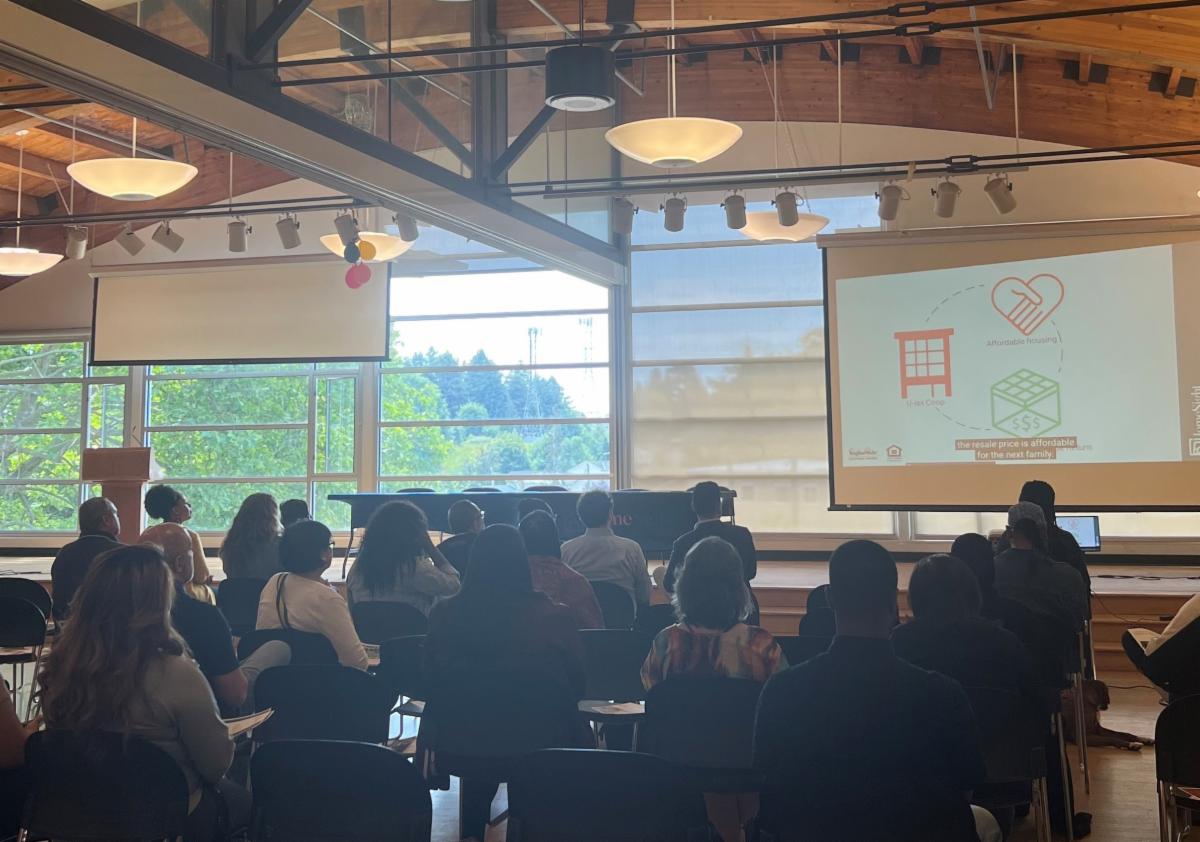
If you’re looking for a home, have you considered a co-op? Cooperative housing, or co-ops, such as HomeSight’s U-lex at Othello Square in south Seattle, can provide an affordable entry point into the Seattle housing market. A co-op is a form of housing where residents share ownership and responsibility for their building and its facilities. Co-op members can build equity while paying less than what they’d pay for rent.
While co-op living presents an opportunity for some—such as first-time homebuyers—it’s not for everyone. Co-ops encourage owners to participate in decision-making and government and generally have more comprehensive rules than typical homeowner associations. Buying into a co-op means buying into a commitment to respect the rules and values of the community.
There are pros and cons to this type of housing, and to illustrate them, we’ll use HomeSight’s co-op, U-lex, as an example.
With so many people feeling shut out of the housing market in Seattle, co-ops are creative options for helping families stay in their community and build equity. U-lex, which offers 68 low- and middle-income residents an affordable equity-building opportunity in South Seattle’s Othello neighborhood, is in the heart of south Seattle, one block from the Othello Light Rail station.
“One major benefits of co-op living at U-lex is the ability to affordably live in the city,” said Uche Okezie, HomeSight’s Director of Real Estate Development. “We want residents to know they can build equity here. They can build wealth in their price range.”
Instead of buying a structure or the land where it sits, a co-op buyer is buying shares in a corporation. The corporation owns the building and land, and all the members of the co-op are member shareholders in the corporation, with each household having an equal voting right. The co-op is run by a board selected by popular vote of the co-op members. Co-op members are encouraged to participate in their governance.
U-lex (pronounced OH-lew) means “gather” in Lushootseed, the language spoken by the Coast Salish people who originally lived in Seattle. Co-ops typically feature gathering spaces designed to build a real community. At U-lex, a central courtyard connected to interior amenity spaces provides a large multi-purpose area. There will also be communal sun decks on the second and fourth floors.
Consumer demand for sustainability is high, and construction trends are responding. U-lex will keep energy costs low by installing rooftop solar panels and water- and energy- efficient fixtures and appliances. In addition, living where you work and play reduces commuting costs and carbon expenditure. Although U-lex offers some garage space under the building, its location one block from the Othello Light Rail Station and its bike storage options will reduce residents’ reliance on their cars.
Co-ops, governed by residents, tend to have more rules than a typical condominium board or homeowner association. At U-lex, with its mission of providing affordable residential ownership to income-qualified families, renting out units will be prohibited and making major changes to units won’t be allowed.
If you have questions about co-op living, contact HomeSight. We can give you all the information you need to make the right housing decision for your family, and your budget.
Every homeowner needs a good, basic toolkit. For dad’s first Father’s Day as a homeowner, fill his toolbox with the basics he may not have yet:
If dad is equipped with essential hand tools, you might want to venture into building his power tool library with:
Homeownership isn’t “all work and no play.” If dad has just begun to enjoy his first backyard, there are tools that can help families enjoy their new space. Consider a tool that allows dad to relax and reconnect:
And finally, a “tool” for relaxation, after all the hard work dad has put toward creating and enjoying the new home:
|
|||||||||||||||||||||||
|
|
||||||||||||||||||||||||||||||||||||||
|
|
||||||||||||||||||||||||||||||||||
|
By: Marc Bartel, HomeSight’s Communications & Marketing Manager
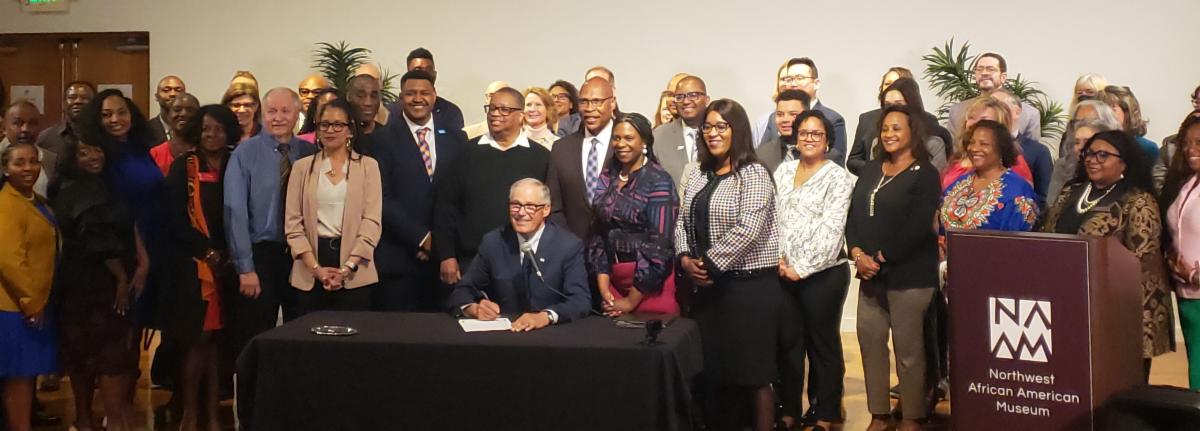
(Seattle, WA – December 7, 2021) HomeSight, a 501(c)(3) non-profit Community Development Financial Institution and Community Development Corporation, in partnership with Windermere Real Estate, U.S. Bank, and National Association of Real Estate Brokers (NAREB), recently launched a new loan product to increase purchasing power and help bridge the affordability gap facing Black/African American homebuyers earning between 80% and 120% area median income in Washington state. The Sam Smith “Hi Neighbor” Homeownership Fund can give eligible borrows up to $12,000 to layer into a mortgage loan to use towards their home’s purchase cost.
Named after legendary Washington State Legislator Sam Smith, who championed the passing of the state’s Open Housing Law barring discrimination based on race and religion in 1967, HomeSight’s new fund hopes to be part of a solution that helps increase Black/African Americans homeownership in the state of Washington.
After working closely with the Smith family, Carl Smith, son of Legislator Sam Smith, said “It’s an honor and a pleasure to have HomeSight use the Sam Smith name for them to pursue equity in home purchases,” Carl continued, “My grandfather instilled in my father that the way to have freedom is to have land and for people in that era, it was freedom.”
According to a report by National Association of Realtors, Black/African American homebuyers are more than twice as likely to be rejected for mortgage loans than white homebuyers.1 Nationwide, only 43% of Black/African Americans can afford to buy a home versus 63% for Whites.2 In Seattle, the Black/African American homeownership rate is 25.8% compared to 50.9% of White homeowners.3 While in King County, the median income for Black households is $48,075, about half the median income of White households at $94,533.4
Windermere Real Estate is the largest regional real estate company in the Western U.S., with over 300 offices and 7,000 agents. Windermere has committed the financial resources of the Windermere Foundation and intends to work with their Agents in the State of Washington to contribute to boost the fund over the next three years.
“After the murder of George Floyd, we got together and decided that it’s morally imperative that we get involved. So, we put Equity and Inclusion as a top priority in the company,” says OB Jacobi, President of Windermere Real Estate. “What we did at Windemere was created a document called Windermere Pillars, focused on effecting change in community and leadership, and one of the pillars was Home Ownership. After meeting with HomeSight, we agreed that the Sam Smith ‘Hi Neighbor’ Homeownership Fund was perfect for us to get behind and push homeownership that can effect change in such a positive way.”
Since 1990, HomeSight has worked to preserve and promote economically and culturally-diverse communities through affordable homeownership, business development, and community advocacy. They believe that communities can only be strong, vibrant, and equitable if homeownership is attainable, cultural anchors can thrive in place, small businesses have access to the knowledge and tools to excel in changing markets, and prosperity is built and shared amongst all members of each unique community.
Nicole Bascomb-Green, VP/Community Affairs Manager, US Bank, NAREB Washington State Chapter President, and a HomeSight board member, has been integral in the creation of the fund. “In my work it’s very important for me that we continue to talk about black homeownership because everyone I knew growing up was a homeowner. Well, we went from having high homeownership numbers during those times and now black homeownership is down to around 28% in Seattle and King County, and that’s just unacceptable,” said Bascomb-Green. She continues, “My work with NAREB is all about democracy in housing, supporting homeownership – particularly black homeownership and other disenfranchised communities, and ensuring we have that capacity to have generational wealth. That’s what this country was built on.”
The Sam Smith “Hi Neighbor” Homeownership Fund is made possible through HomeSight funds and private philanthropy. To learn more about the fund and/or make a donation, please visit: http://homesightwa.org/sam-smith-hi-neighbor-homeownership-fund/
(1)(2) A Snapshot of Race and Home Buying in America (2021), National Association of Realtors. https://cdn.nar.realtor/sites/default/files/documents/2021-snapshot-of-race-and-home-buyers-in-america-report-02-19-2021.pdf
(3)(4) The Racial Wealth Divide in Seattle, WA (2021), Racial Wealth Divide Prosperity Now. https://prosperitynow.org/sites/default/files/resources/Racial%20Wealth%20Divide_%20Profile_Seattle_FINAL_3.15.21.pdf